
Male Body Types and Proportion: The Western System Through an Asian Styling Lens
The Western body type system is still the most widely used framework for understanding male proportions.
In reality, most men, including Asian men, fall neatly within these same classic body types. The structure works.
Where differences appear is not in anatomy, but in aesthetic preference and styling priorities. Across many Asian fashion contexts, proportion often matters more than size, silhouettes are kept controlled, and structure is favoured over exaggeration.
This means the same body type can look polished or awkward depending on how it’s styled.
At MMNine Lab, we use the Western body type system as the foundation, then apply an Asian styling lens focusing on balance, proportion, and visual clarity rather than extremes.
What Is the Western Body Type System for Men?
The Western body type system categorises men by overall silhouette, not height, weight, or muscle mass.
It looks at:
Shoulder width
Chest-to-waist ratio
Hip width
Balance between upper and lower body
Because clothing responds to proportion, not numbers on a scale, this system remains widely used by stylists, tailors, and menswear brands.
Male Body Types Explained (With Integrated Asian Styling Context)
🔺 Triangle Body Type
Traits:
Narrower shoulders with a wider waist and hips.
How it often reads in Asian styling:
Bottom-heavy or soft, even at a healthy weight.
Styling focus:
Add structure to the shoulders (jackets, overshirts, firm knits)
Keep trousers clean and dark with controlled drape
Slightly cropped outerwear to rebalance proportions
Avoid skinny or clingy bottoms
🔻 Inverted Triangle Body Type
Traits:
Broad shoulders and chest with a narrow waist and hips.
How it often reads in Asian styling:
Strong and masculine, but easily overemphasised.
Styling focus:
Avoid overly tight tops that exaggerate bulk
Balance with straight or wider-leg trousers
Softer tailoring over extreme shoulder padding
Keep the silhouette refined, not aggressive
▭ Rectangle Body Type
Traits:
Shoulders, waist, and hips are similar in width.
How it often reads in Asian styling:
Clean and youthful, sometimes lacking presence.
Styling focus:
Use layering to create structure
Cropped or semi-fitted outerwear works best
Choose textured fabrics over extreme cuts
Avoid head-to-toe oversized fits
⭕ Oval Body Type
Traits:
Fuller midsection with softer lines and limited waist definition.
How it often reads in Asian styling:
Unstructured rather than powerful.
Styling focus:
Create vertical flow with open layers
Prioritise shoulder fit over waist suppression
Use structured but forgiving fabrics
Avoid both stiff tailoring and clingy knits
🟥 Trapezoid (Balanced) Body Type
Traits:
Shoulders slightly wider than hips with moderate waist definition.
How it often reads in Asian styling:
Balanced, professional, adaptable.
Styling focus:
Maintain natural proportions
Focus on fit, fabric, and finish
Avoid extreme silhouettes in either direction
General Asian Styling Principles for Men
Regardless of body type, these principles apply across most Asian fashion contexts:
Proportion over size
Structure over bulk
Clean, controlled silhouettes
Balance between upper and lower body
If an outfit feels “almost right,” it’s usually a proportion issue, not your body.
How to Find Your Body Type
Before focusing on styling, identify your shape accurately.
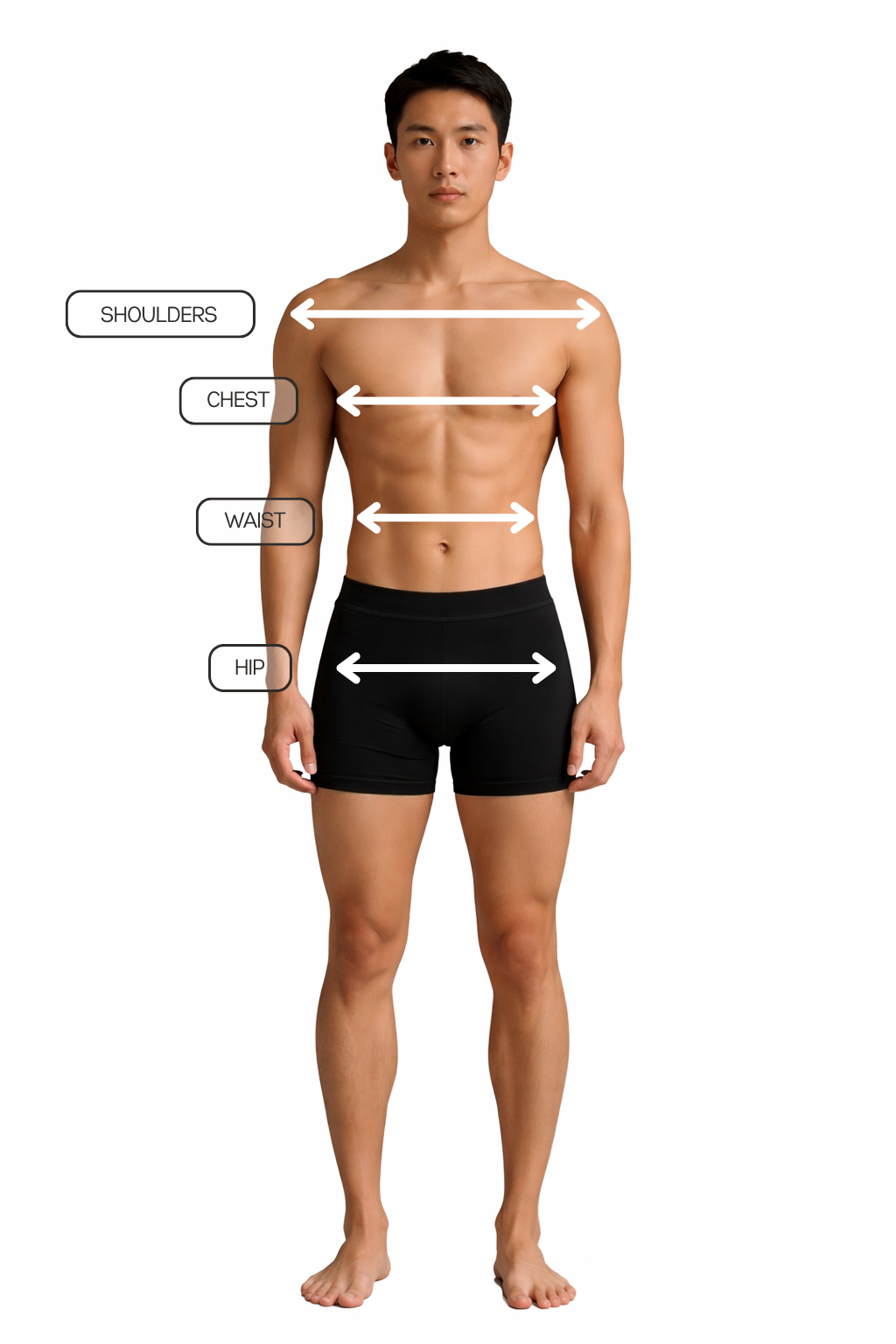
Step 1: Take Key Measurements
Shoulders: Widest point
Chest: Fullest part, relaxed
Waist: Natural waistline
Hips: Widest point of hips and seat
Step 2: Compare Proportions
Inverted Triangle: Shoulders clearly wider than waist and hips
Triangle: Waist or hips wider than shoulders
Rectangle: Measurements within ~5–10%
Oval: Waist is the dominant measurement
Trapezoid: Shoulders slightly wider than hips
Step 3: Mirror Check
Stand in fitted clothing and look at your outline, not details. Step back if needed — silhouette matters more than definition.
Not sure how this applies to your own body?
Knowing your body type is useful, but the real difference comes from understanding how your proportions, frame and style goals work together.
With MMNine Lab personal styling, we help you turn body analysis into practical outfit choices, from cuts and lengths to fit, colour and overall balance.
See How Personal Styling WorksAvailable online.